Online MJMC
Master in Journalism and Mass Communication
MJMC full form is Master in Journalism and Mass Communication which is a 2-year postgraduate degree program teaching students about the 3 core domains of media, i.e. electronic media, print media, and new media. It includes the study of different forms of mass communication & media including newspapers, Radio, Television, Films, etc., to convey information to a large audience.
What is MJMC for Working Professionals Course?
MJMC full form is Master in Journalism and Mass Communication which is a 2-year postgraduate degree program teaching students about the 3 core domains of media, i.e. electronic media, print media, and new media. It includes the study of different forms of mass communication & media including newspapers, Radio, Television, Films, etc., to convey information to a large audience.
MJMC for Working Professionals Course Overview
The MJMC program is designed in a way that covers theoretical knowledge as well as practical aspects related to the field of Journalism and Mass Communication and includes subjects like reporting, editing, radio communication, and creative writing.
| Parameters | Course Details |
|---|---|
| MJMC Course Level | Postgraduate |
| MJMC Full Form | Masters in Journalism and Mass Communication |
| MJMC Course Duration | 2 Years |
| MJMC Eligibility Criteria | A bachelor’s degree in either BJMC or any relevant discipline. |
| MJMC Entrance Exam | CUET-PG, URATPG, AP PGCET, etc. |
| MJMC Top Colleges | Savitribai Phule Pune University, Aligarh Muslim University, Madras Christian College, Chandigarh University etc. |
| MJMC Course Fee | INR 700 – INR 5.7 Lakh |
| MJMC Job Profiles | Content Writers, Video Editors, Copywriters, Reporters, Digital Marketing Executives, Event Managers, and more. |
| MJMC Average Salary | INR 2.9 LPA |
| MJMC Top Recruiters | India Today Group, Business Standards, Dainik Jagran, Wizcraft, DNA Entertainment Networks, ROI Minds, etc. |
MJMC Eligibility Criteria
The eligibility conditions for pursuing an MJMC program differ by institute. However, some of the essential eligibility conditions that you must meet are as follows:
- A bachelor’s degree in either BJMC or any relevant discipline such as Journalism, Mass Communication & Media, Advertising, Public Relations, Film & TV, etc.
- With a minimum of 50% aggregate score from a recognized university.
Approved & Accreditations

National Assessment and Accreditation Council

All India Council for Technical Education

National Institutional Ranking Framework

Association of Indian Universities
Advantages of MJMC for Working Professionals Degree
- Career Enhancement – The MTech degree enhances your qualifications, making you eligible for higher-level positions in your organization or industry.
- Specialized Knowledge – Gain expertise in advanced engineering topics that directly align with the needs of the industry, improving your practical skills.
- Flexible Learning – Designed with professionals in mind, the course offers weekend or online classes, allowing you to balance work and study commitments.
- Increased Job Opportunities – An MTech degree makes you more competitive in the job market, opening doors to better opportunities, higher salaries, and more senior roles.
- Networking Opportunities – Connect with fellow professionals, experts, and industry leaders, expanding your professional network and career prospects.
Why Should You Pursue MJMC for Working Professionals?
Flexibility
Reduce Cost
Networking
Support
Knowledge
| MJMC Syllabus Semester I | |
|---|---|
| Basic Principles of Communication | History and Development of Mass Media |
| Media Laws and Ethics | Computer Applications for Media |
| Reporting and Editing | Professional Writing |
| Communication Theory | Print Journalism Practice |
| MJMC Syllabus Semester II | |
| Communication Development | Media Management |
| Media and Society | Advertising and Public Relations |
| Electronic Media (Radio and TV) | Advertising |
| Photography | PR and Corporate Communication |
| MJMC Syllabus Semester III | |
| International Communication Rural Communication | Reporting and Editing for Electronic Media |
| Internship | Intercultural Communication |
| Radio and TV Production | Media Management |
| MJMC Syllabus Semester IV | |
| New Media | Media and Human Rights |
| Environment Communication | Study Tour and Reporting |
| Communication Research | – |
Who Should Enroll?
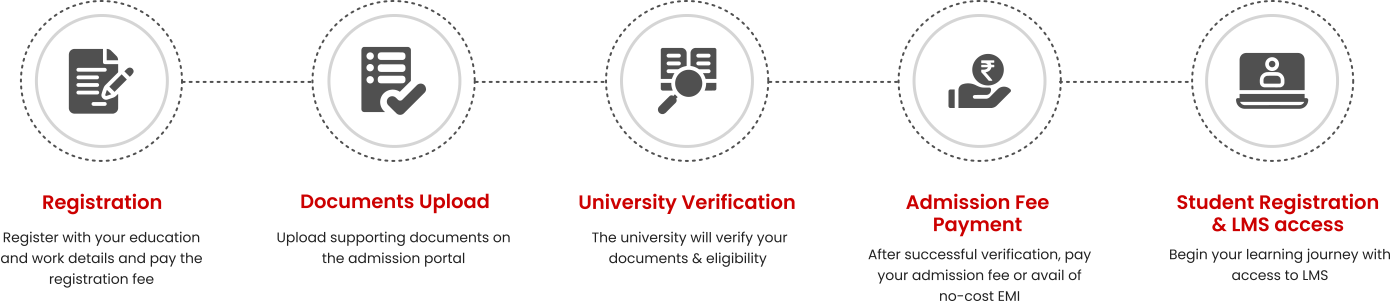
Admission Process
Applying for our online degrees has never been easier - follow these steps!
Who Can Apply for MJMC Distance Learning Courses?
Working Professionals
Homemakers
Rural Students
Career Changers
Recent School Graduates
Lifelong Learners
People Seeking Second Degrees
Individuals with Financial Constraints
Other Distance Education Courses
Frequently Asked Questions
here are about 2,400+ best Mass Communication and Media colleges in India. Of these, 1,392 colleges are privately owned, 374 colleges are owned by public/government organisations, and public-private entities own 127 colleges.
It is estimated that joining Mass Communication colleges in India can be affordable, as most colleges have total tuition fees of less than INR 1 lakh.
fer to the table below for a detailed overview of the top Mass Communication colleges in India along with their average placement package and the prominent recruiters:
College Name | Average Placement Package | Prominent Recruiters |
|---|---|---|
MICA Placements | INR 19 LPA | Cognizant, Deloitte, Flipkart, Wipro, Google, etc. |
New Delhi Institute of Management Placements | INR 8 LPA | Reliance Jio, Tech Mahindra, Infosys, Genpact, etc. |
University of Mumbai Placements | INR 5 LPA – INR 15 LPA | Blue Star, Indiamart, GEP, Borosil, etc. |
Delhi University Placements | INR 5 LPA – INR 16 LPA | Capgemini, Google, Barclays, EY, Paytm, etc. |
Hi, both of these are closely related functions of the NEWS industry.
Mass communication deals with the procedure of conveying or transmitting a message to the general population through media like radio, newspapers, magazines, television, internet and so on. However, journalism is concerned with the compilation and transmission of news through the print media and electronic media.
Based on the different mediums, the field of journalism can be divided into three broad categories namely the print (I. e. the newspapers and magazines), electronic (I. e. T. V. and radio) and online journalism. So based on your interests you could even choose for a course specific to one of these mediums. As for mass communication there are media fields such as that of theater, radio, T. V. , filmmaking, journalism, advertising, public relations and others.
Strong technical knowledge in engineering, problem-solving, time management, and analytical skills.