A Bachelor of Arts (BA) in Philosophy is a three-year undergraduate degree that focuses on critical thinking, logic, ethics, metaphysics, epistemology, and philosophical traditions. The program is ideal for individuals interested in reasoned debate, ethical studies, intellectual inquiry, social thought, and analytical reasoning. It helps students develop strong logical, interpretative, and problem-solving skills valuable for academic, legal, administrative, and research-oriented careers.
What is BA in Philosophy Distance Education Course?
A BA in Philosophy (Distance Education) is a flexible undergraduate program that allows students to earn a Bachelor of Arts degree in Philosophy without attending regular on-campus classes. Designed for working professionals, homemakers, and learners unable to pursue full-time education, the program focuses on ethics, logic, metaphysics, epistemology, Indian and Western philosophy, and critical reasoning and is delivered through online and correspondence learning modes.
Distance Education BA in Philosophy Course Overview
A BA in Philosophy (Distance Education) is a versatile undergraduate program designed to provide quality education in philosophical studies through flexible distance learning. The program allows students to explore ethics, logic, metaphysics, epistemology, and Indian and Western philosophy while benefiting from an affordable and accessible learning model.
This learner-friendly approach enables students to study at their own pace, access digital and printed study materials, and balance their academic, personal, and professional commitments effectively, making it an ideal option for aspiring philosophers, researchers, and critical thinkers.
To enroll in a BA Distance Education program, candidates must fulfill the following eligibility criteria:
Eligibility Criteria
To pursue a Distance Education BA program, candidates must have completed 10+2 from a recognized board. While some universities accept all pass percentages, others may require a minimum of 45-50% marks. Most institutions have no upper age limit, making the program accessible to learners of all ages.
Duration
The BA Distance Education program usually takes 3 years, divided into 6 semesters. However, universities often provide flexibility, allowing students to complete the course within 5-6 years if needed. This extended timeline accommodates those balancing studies with work or other commitments, making it a convenient option for diverse learners.
1. Flexibility in Learning Distance BA programs allow students to study at their own pace, making it easier to balance education with personal or professional commitments. This self-paced approach ensures that learners can design a schedule that aligns with their unique responsibilities, providing greater control over their academic journey.
2. Cost-Effective Compared to traditional on-campus programs, distance BA degrees are much more affordable. Reduced tuition fees, minimal transportation costs, and no need for accommodation make it a highly economical option for students seeking quality education without straining their budget.
3. Accessibility With a Distance BA degree, students can access course materials, online lectures, and resources from any location. This eliminates the need for relocation and provides the opportunity to learn from reputed universities without being bound by geographical limitations.
4. Wide Range of Specializations Distance BA programs offer a broad spectrum of subjects, including literature, history, sociology, political science, and psychology. This variety allows students to explore their interests and choose a specialization that aligns with their career goals or personal passion.
5. Career Advancement Pursuing a Distance BA degree enables working professionals to enhance their qualifications while maintaining their current job. This dual advantage of gaining education and work experience simultaneously can lead to better career prospects and professional growth in the long run.
6. Lifelong Learning Opportunity Distance education programs cater to learners of all ages, making them an excellent choice for individuals who wish to return to academics after a gap or pursue education for personal enrichment. This inclusive approach promotes lifelong learning and self-improvement.
Who Should Enroll?
Candidate looking for Working professional
Candidate looking for Time Constraints
Candidate looking for Growth
Candidate looking to scale up salary
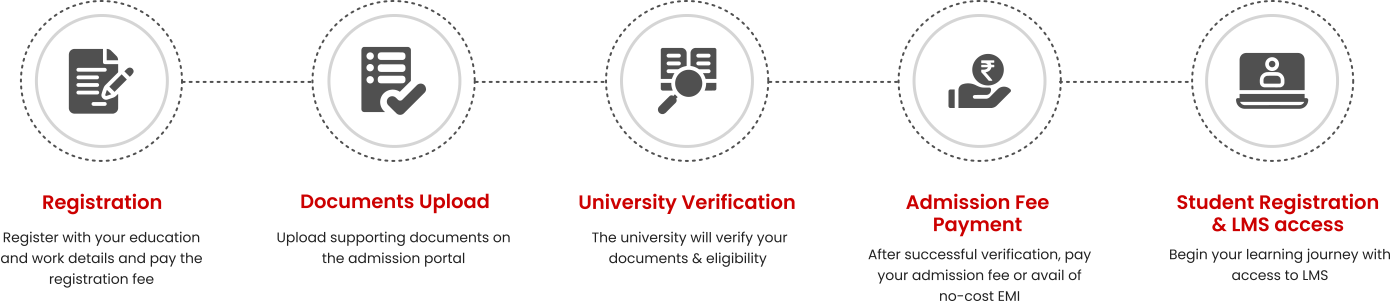
Admission Process
Applying for our online degrees has never been easier - follow these steps!